
Canon of Amsterdam
November 2025
“What and who shaped Amsterdam throughout history into the city it is today?”
That is the question that runs like a common thread through the new Canon of Amsterdam, initiated by Stadsarchief Amsterdam. The renewed Canon was launched in November 2025. Educational material for primary and secondary education was created for this purpose and is freely available for teachers and schools.
Saša was asked to create 5/49 detailed illustrations that accompany this new educational material. For this request he dove into his love for history, the city of Amsterdam, and bringing these specific stories to life again. He drew ‘Grachtengordel’, ‘Aansprekersoproer’, ‘Rebrandtstad’, ‘Noordzeekanaal’, and ‘Jordaan.
For more information about the initiative click here.
Venster 12. ‘Grachtengordel’, 1612
“At the beginning of the seventeenth century, Amsterdam was bursting at the seams. The population was growing rapidly, the ports were becoming full, and the many small businesses were causing a nuisance. New plans were needed to create more space. The result was impressive: fourteen kilometers of canals, eighty bridges, and the famous Golden Bend with its stately buildings. The canal belt shone as the jewel of the city, but at the same time marked the social divides."
Click here to read more (in Dutch)
Venster 21. ‘Aansprekersoproer’, 1696
“In the seventeenth century, riots in Amsterdam were not uncommon. Hunger, taxes, or religious tensions drove residents into the streets. Protest was often their only voice. The Funeral Directors' Riot of 1696 is the most violent example of this. What began as resistance by undertakers against a new municipal service and additional taxes escalated within a few days into a large-scale uprising. The riot clearly exposed the social inequalities within the city."
Click here to read more (in Dutch)
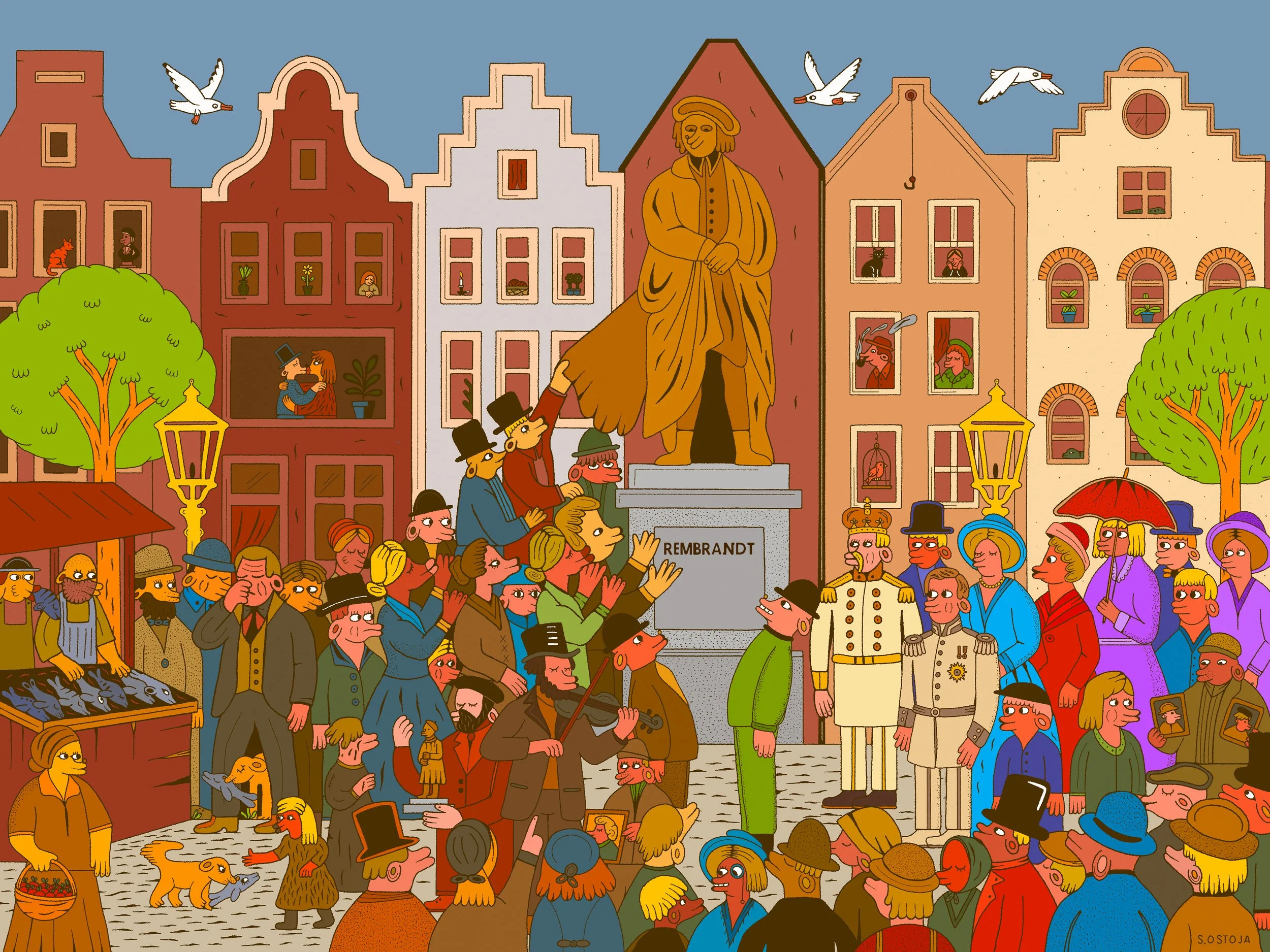
Venster 28. ‘Rebrandtstad’, 1852
"On the morning of May 27, 1852, a large crowd gathers at the Amsterdam Botermarkt. Even the King and the Prince are there. Together, they unveil the statue of Rembrandt van Rijn, the most famous painter in the Netherlands. Such a monument in a prominent location is a statement: Amsterdam claims the position of European Capital of Culture of the Netherlands. But for whom is this hero worship actually intended?"
Click here to read more (in Dutch)
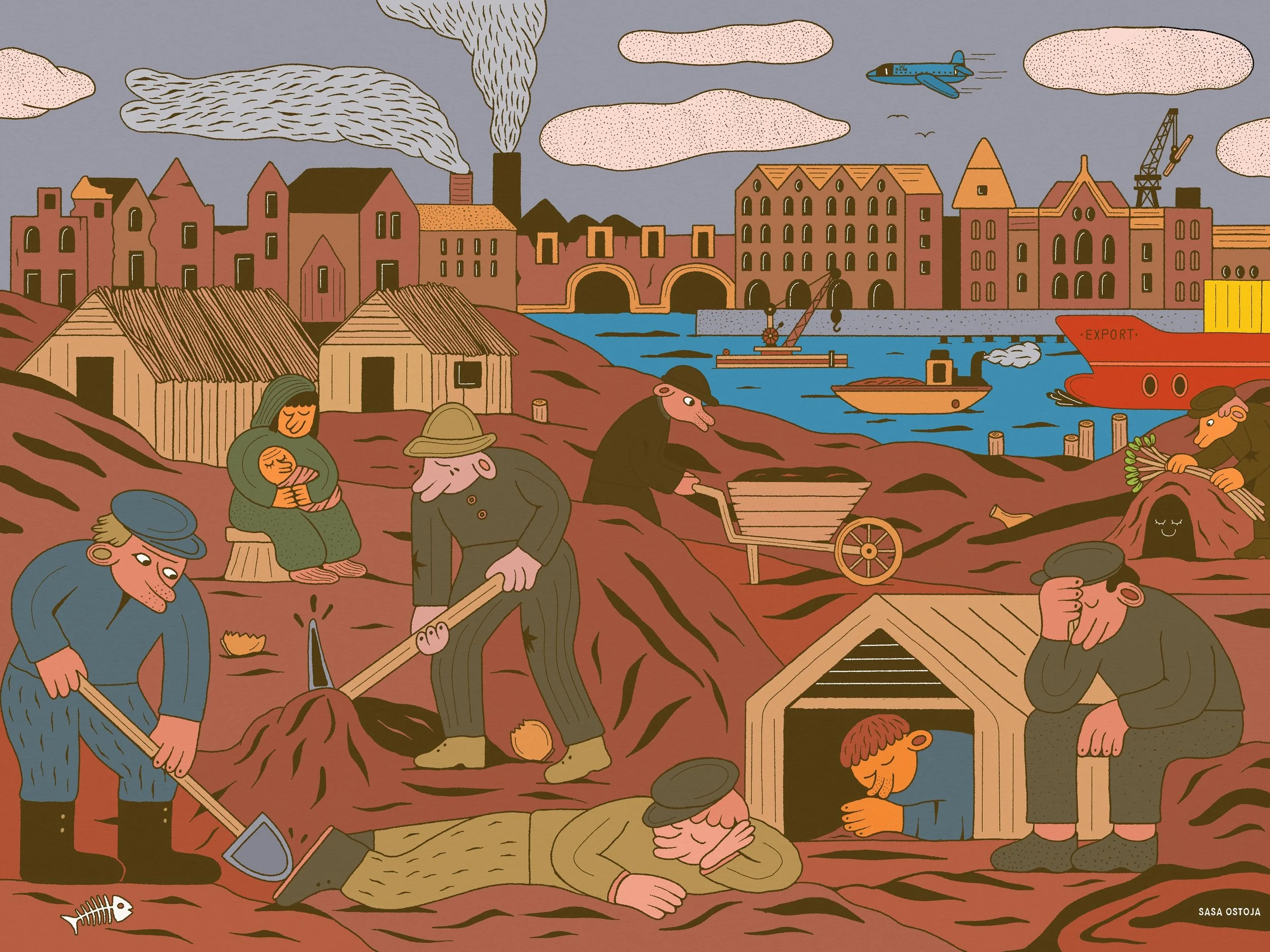
Venster 30, Noordzeekanaal, 1876
At the beginning of the 19th century, things were not going well in the harbor of Amsterdam. Rich people in the city decided to invest in a new canal that would connect Amsterdam directly to the North Sea. The workers paid a high price to build it, but their hard work made the city easier to reach. In 1876, the first ships sailed through the North Sea Canal. This helped Amsterdam’s economy grow again and made the city easier to reach from other countries.
Click here to read more (in Dutch).
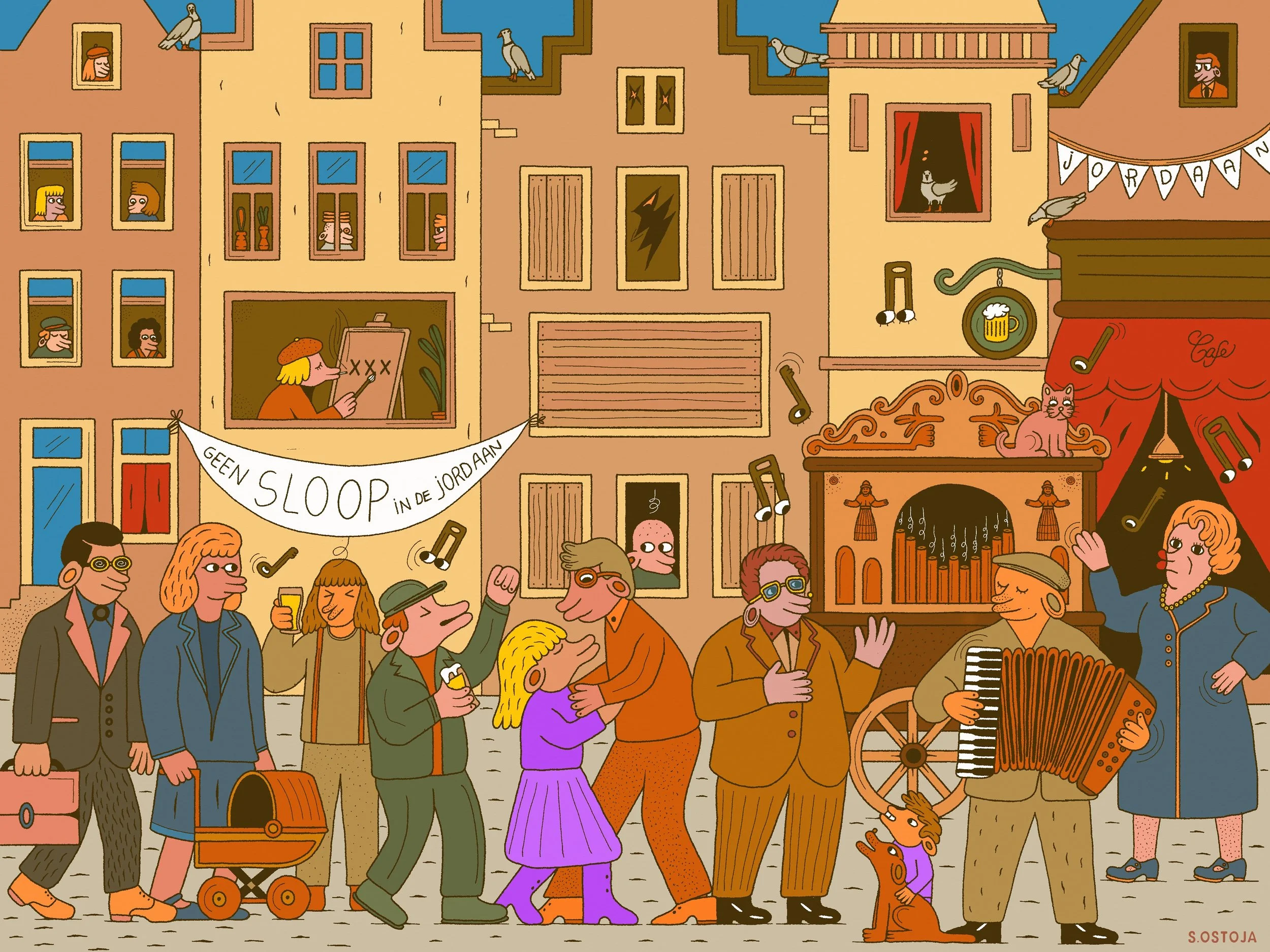
“Better to be in Mokum without a penny than in Paris with a million.” With this one line, Johnny Jordaan captures the deep pride Amsterdammers feel for their city. That pride grows in the 1950s and ’60s, especially in the Jordaan, the city’s most iconic neighborhood. More than once, the Jordaan nearly disappears. The demolition of the poor, run-down district appears repeatedly on the city council’s wish list. But the people of Amsterdam rise up, and defend 'their' Jordaan."
Click here to read more (in Dutch).